Resources
Shurley English
Shurley English maintains that effective instruction in English must be founded upon an understanding of how the parts of speech work together in a sentence. A good grammar foundation gives students the skills to improve writing. Grammar is the structure of sentence composition. Through grammar, students learn how to write, improve, and expand sentences. After they have an understanding of sentence structure, students are then able to combine sentences successfully into paragraphs, essays, and reports. For product information on Phonics Pathways, click here or visit their website.
Create! Press
Create! Press carries creative approaches to teaching creative writing and composition. Their products include the Create-A-Story game, Writing Adventures, Stepping Stones, and more.
Writing Strands & Reading Strands
This program is based on research which shows that there is no useable relationship between the study of grammar as an abstracted skill and the ability to communicate. Writing Strands provides quality reading, writing and speech materials for homeschoolers with children ages 3 through 18. The guided exercises in Writing Strands progress incrementally and allow students to work independently, yet provide the guidance students need to sharpen their ability to inform, persuade and entertain in writing. Helps develop successful writing skills for your child’s lifetime.
Activities & Experiments
Greeting Card Contest from Kate Harper Designs
Kate Harper Designs is seeking out submissions for our Greeting Card Contest to select quotes for our "Kid's Quotes" greeting card line. We always have a shortage of submissions, so the more you submit, the higher chances you have of being published. This contest is open to children aged 12 or younger. If your quote is selected, you will receive $25, your name printed on the card, and free greeting cards.
We the People Ideas of America Essay Contest
As part of its We the People initiative, National Endowment for the Humanities (NEH) invites high school juniors to participate in an essay contest that invites them to reflect on The Idea of America.
UCTheFuture - Life in the Year 2047
This contest involves electronically or manually submitting a graphic depiction (drawing, photo or other image) along with a 50 to 100-word description of what an aspect of the world will look like in the year 2047.
A $1,000 prize will be awarded to the winning entry chosen from the first 50 entries submitted and selected for viewing on the UCTheFuture web site.
Letters About Literature
The Center for the Book in the Library of Congress, in partnership with Target Stores and in cooperation with affiliate state centers for the book, invites readers in grades 4 through 12 to enter Letters About Literature, a national reading-writing contest. To enter, readers write a personal letter to an author, living or dead, from any genre-- fiction or nonfiction, contemporary or classic, explaining how that author's work changed the student's way of thinking about the world or themselves. There are three competition levels: Level I for children in grades 4 through 6; Level II for grades 7 and 8, and Level III, grades 9 - 12. Winners receive cash awards at the national and state levels.
Teaching Tips & Ideas
How I Teach a Large Family in a Relaxed, Classical Way: Language Arts
Tips for teaching language arts (writing, grammar, handwriting) in a large family.
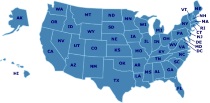
Looking for Another State?
Featured Resources
As an Amazon Associate, we earn from qualifying purchases. We get commissions for purchases made through links on this site.

Traffic: Why We Drive the Way We Do (and What It Says About Us)
In this brilliant, lively, and eye-opening investigation, Tom Vanderbilt examines the perceptual limits and cognitive underpinnings that make us worse drivers than we think we are. He demonstrates why plans to protect pedestrians from cars often lead to more accidents. He uncovers who is more likely to honk at whom, and why. He explains why traffic jams form, outlines the unintended consequences of our quest for safety, and even identifies the most common mistake drivers make in parking lots. Tr...

Name That Country Game
"Dear Pen Pal, Konnichi wa! We've been to see Mt. Fuji. Name my country! Sayonara, Michiko." Challenge your group with this fast-paced geography game, created in 1992 by Educational Insights, Inc. Everyone begins at the post office. Players twirl a finely printed spinner (built into the game board itself) to select one of 60 countries. If the player can correctly identify the country's location on the board's numbered map, he or she may advance along the path to the finish. Bonus moves are won b...
Phonics Pathways
Phonics Pathways begins with short-vowel sounds, slowly progressing to whole words, phrases, and sentences of gradually increasing complexity. Special teaching tips, extensive examples, and 100% decodable practice readings reinforce each lesson. Contains all spelling rules with a spelling index, spelling charts, spelling short-cuts, diacritical markings, and a wealth of inspirational proverbs. The new 9th edition of Phonics Pathways features many new enhancements including a wealth of reproducib...

For the Good of the Earth and Sun: Teaching Poetry
For the Good of the Earth and Sun is for teachers at all levels, especially for those teachers who feel anxious about introducing poetry to students. Georgia Heard offers a method of teaching poetry that respects the intelligence of students and teachers and that can build upon their basic originality. She explores poetry from the inside as it is: a powerful and necessary way of looking at the world, and one of mankind's most durable inventions. Her book provides detailed, organized information ...

The Teenage Liberation Handbook: How to Quit School and Get a Real Life and Education
This classic homeschool resource is intended for teens who are ready to take charge of their own education. Written by Grace Llewellyn in the '90s, it is still relevant today. Teens will be empowered by claiming their natural ability to teach themselves and to fully personalize their education. Covers the decision to leave school, as well as many of the learning opportunities available to teens.